

How Everything Evolves: The Conditions for Evolution
What determines whether systems evolve, from stars to lions and libraries

In the first article in this series, we saw how order emerges from chaos; how complex systems self-organise; and how self-organised systems can introduce new patterns that are stable over time. (If you missed part 1, you can check it out here: How Everything Evolves: 1 — How Order Emerges from Chaos)
What happens once order has emerged within a system? How does it then evolve over time?
Darwin’s example: evolution by natural selection
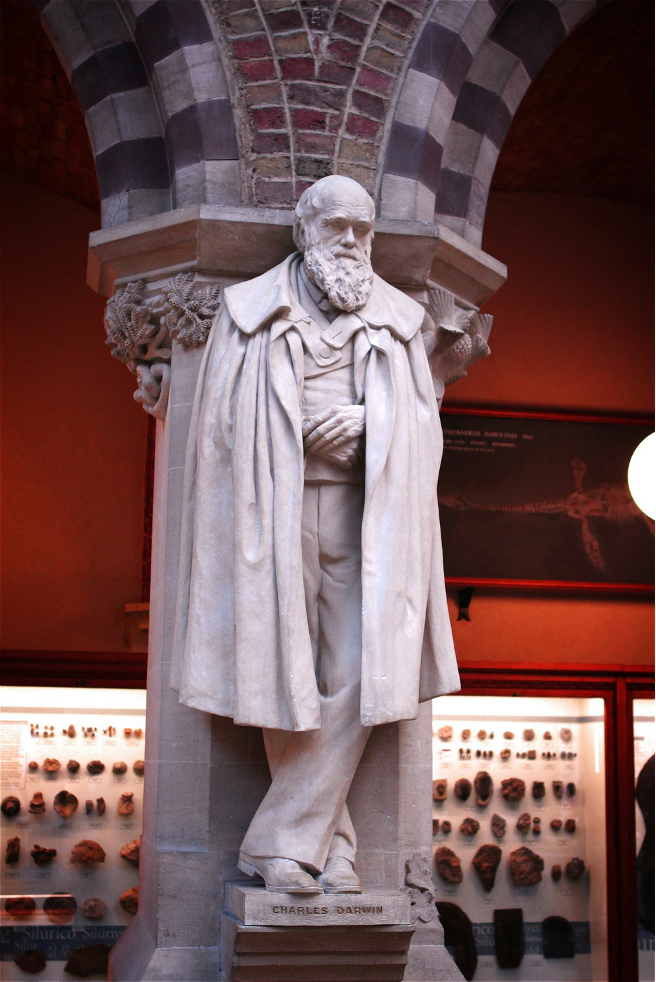
Every evolving system, from biological life to the global economy, has common elements governing its evolution.
We can examine these dynamics from an example that is so well-known it is often synonymous with the word evolution itself: evolution by natural selection.
First published in detail in Charles Darwin’s 1859 On the Origin of Species, evolution by natural selection occurs when:
Selective pressures act on a population (e.g. limited food sources);
Traits vary among individuals in the population (in either their bodies or their behaviour);
This variance confers advantages or disadvantages on individuals in their likelihood of surviving and reproducing; and
The traits are heritable and can be passed between generations.
This leaves successful members of a population more likely to replicate their traits in future generations, and so — at a population level — the species becomes better adapted to the environment over time.
The point of this article is not to revisit natural selection, but to demonstrate that these elements of evolution are not unique to biology. All evolving systems follow the same underlying logic, and so the evolution of species (so brilliantly deduced more than 160 years ago) is a single example of a much bigger picture.
I argue that these features of natural selection can be generalised outside of biology to the following core elements of systems capable of evolution:
Temporal stability — the system must be capable of sustaining itself over time;
Internal dynamics — there must be some dynamics acting within the system that give rise to variance and self-reorganisation;
Structural replication — the system must be capable of replicating its own structure; and
Selective pressures — there must be some pressures acting on the system such that some variance contributes to the self-propagation of the system, and other variance contributes to its extinction
For this article, we will explore the first three elements and, along the way, we’ll discover what it means for a system to be complex and adaptive. We’ll then discuss selective pressures, the shaping hand of the environment, in the next article.
In part 1, we investigated the emergence of stable, self-organising patterns. Next, let’s look at how they persist over time.
Temporal Stability
It may sound obvious, but temporal stability is fundamental to evolving systems. Once an assembly of elements has formed some new structure — atoms into molecules, humans into an organisation — then whether that structure is stable over time determines whether it can persist.
Systems that are not stable over time will decay and lose their structure, losing the ability to evolve at all. As an example from chemistry, molecules with unpaired electrons (radicals) are often extremely short-lived; unpaired electrons are highly unstable, and so they rapidly react with other molecules in the immediate environment to form a more stable bond structure.
In contrast, in the most stable arrangements of carbon atoms — diamonds — the atoms and electrons are arranged in a low-energy configuration with such temporal stability that they only react under extreme conditions like intense heat in pure oxygen.

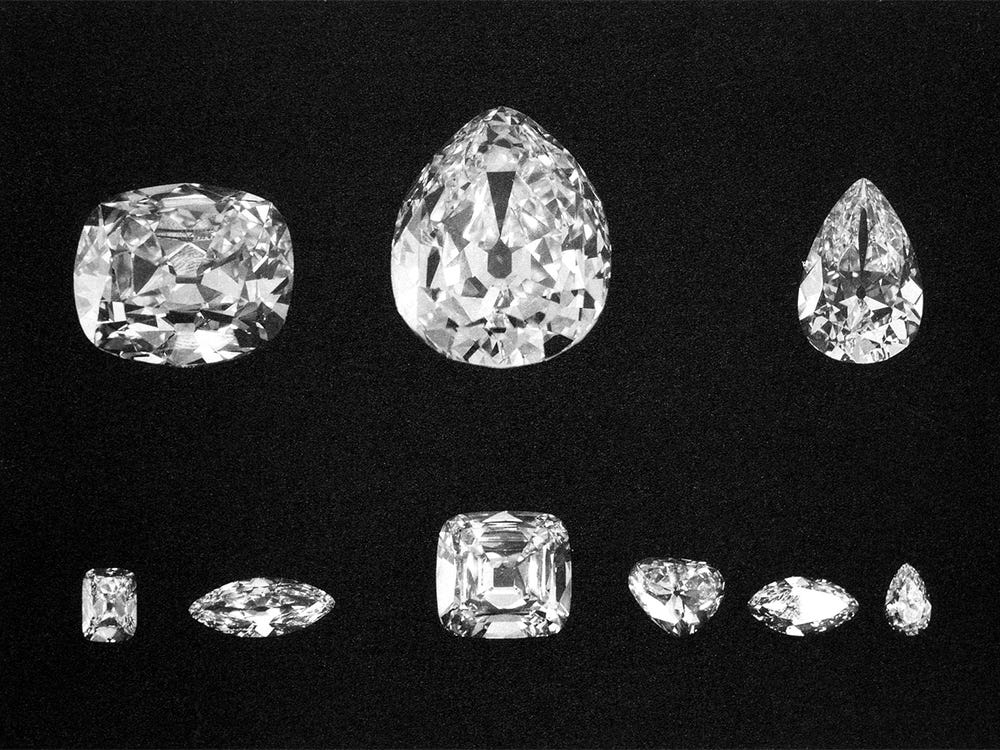
And for human organisations, around half of all start-ups fail within five years, whereas the oldest documented company, a Japanese family-owned construction firm, lasted for more than 1400 years.
For humans, we are the beneficiaries of billions of years of evolved complexity in the interconnected web of life on Earth. But for so much complexity to evolve in the first place required an extraordinary span of relative temporal stability: at least four billion years. That is a cosmic length of time; the universe itself is only 13.8 billion years old.
That’s what makes it so remarkable. On Mars, when its atmosphere was blasted into space by solar radiation, it made the delicate chemical reactions that life is built upon unstable. On Venus, it is improbable that organic chemistry could ever be stable — except perhaps high in the atmosphere, where it would lack the nucleation sites needed to initiate any stable self-replicating processes.
It is highly probable that life exists on other planets in this galaxy; it may even exist in our own solar system in the subsurface oceans of the icy moons Europa and Enceladus. Indeed, we are starting to see evidence from exoplanets of biological signatures. But, just like any life that may have once existed on Mars, most extraterrestrial lifeforms are likely to be simple cellular creatures, closer to bacteria than anything more complex.
This is why: for self-organising systems to increase in complexity, they require astronomical lengths of temporal stability, without which the organic chemical reactions that comprise biological life could never have compounded into intelligent life.
But stability alone is not enough for a system to evolve; a diamond is stable, but it can hardly be said to evolve.
Evolution requires activity — dynamics — between the system’s constituent elements. And this introduces variance.
How dynamics create variance and adaptivity
Let’s start with the opposite, to illustrate the point.
Think of a rigid system like an asteroid in the asteroid belt — yes, it is stable over time, but it is inert. As a solid object, it has no meaningful internal dynamics that allow it to reorganise, and so it cannot vary over time. It orbits the Sun, absorbing energy from light and then dissipating it away into space, but it is the same composition of dust and rock that it was a million years ago (until it collides with one of its neighbours).
This is a simple system. It is not complex, because its internal dynamics do not allow reorganisation. And without such dynamics, the system cannot evolve; it cannot self-organise or adapt, and so it exhibits no emergent behaviour at the macroscopic level.
In contrast, when a system does have dynamics between its elements — organic chemical gradients in a liquid medium, say, as in the Earth’s primordial soup — it can self-organise, as discussed in part 1. And when a system can self-organise, the equation for temporal stability changes. Rather than being stable in a static sense, like a diamond or an asteroid, a complex system must become dynamically stable over time.
An example of a dynamically stable system is a star: it balances the competing forces of gravity and pressure created by fusion into a temporally stable form that can last for billions of years, even while all the constituent elements (the atoms and electrons and radiation) are in a constant state of flux.
That is, any changes to the system are accounted for by the system itself. It is not inert; instead, it dynamically responds to external disturbances to self-correct and maintain a temporally stable macroscopic form.
This is what is required for dynamic temporal stability; the system’s constituent elements should be replaceable without disrupting the system’s function. In a protein, each individual atom is fungible; hydrogen atoms can be lost and replaced without changing the function of the protein.1
What matters is not the individual elements, but the persistent structure of the system they dynamically form.
In your case, 1% of the cells in your body die and are replaced every day, but the overall system — you — remains the same, much like the Ship of Theseus.
But this flexibility introduces the possibility of variance in structural formation. For biological life, the dynamic chemistry involved in reproduction (e.g. DNA replication and RNA transcription) means that errors can be introduced into the copying of genetic material, creating cross-generational variance.
So, while variance may arise mechanistically from the simple fact that a complex system has dynamic and replaceable elements interacting, its introduction creates the conditions for evolution. Some variance is deleterious – like cancer – whereas other variance is beneficial (e.g. your immune system learning to adapt to infection).
And the greater the amount of useful variety enabled by any given system, the more adaptive it can be to a changing environment.
Species that are able to tolerate a wide range of ambient temperatures and environments (brown rats, say) are found all around the world; those that require a narrow set of environmental conditions to flourish will struggle to adapt to a warming climate (sorry, polar bears).
Similarly, businesses with diverse product offerings are better able to adapt to changing market conditions; investment funds will diversify portfolios for the same reason.
And this is why variation is so important. Complex systems with little internal variation are more likely to collapse — they are brittle to changes in the environment. As an example within living memory, Blockbuster died when it failed to adapt to a changing business landscape.
Here, we arrive at a powerful conclusion: in order for a system to evolve, it must be complex — with dynamics between its elements — and adaptive — it must be able to change in response to its environment, or it will lose its dynamic temporal stability.
Therefore, only complex adaptive systems may undergo the kind of sustained, open-ended evolution first observed in nature by Alfred Russel Wallace and Charles Darwin.
So, while a star is dynamically stable and changes over time, it cannot be said to evolve; while stellar evolution produces diversity of forms, it does not adapt.
In contrast, biological evolution produces adaptation by preserving successful organisation through variation and selection. Evolution requires not just transformation, but adaptive persistence — and that leads us to the third generalisable element of evolving systems:
Replication.
Structural replication – the persistence and copying of functional structure
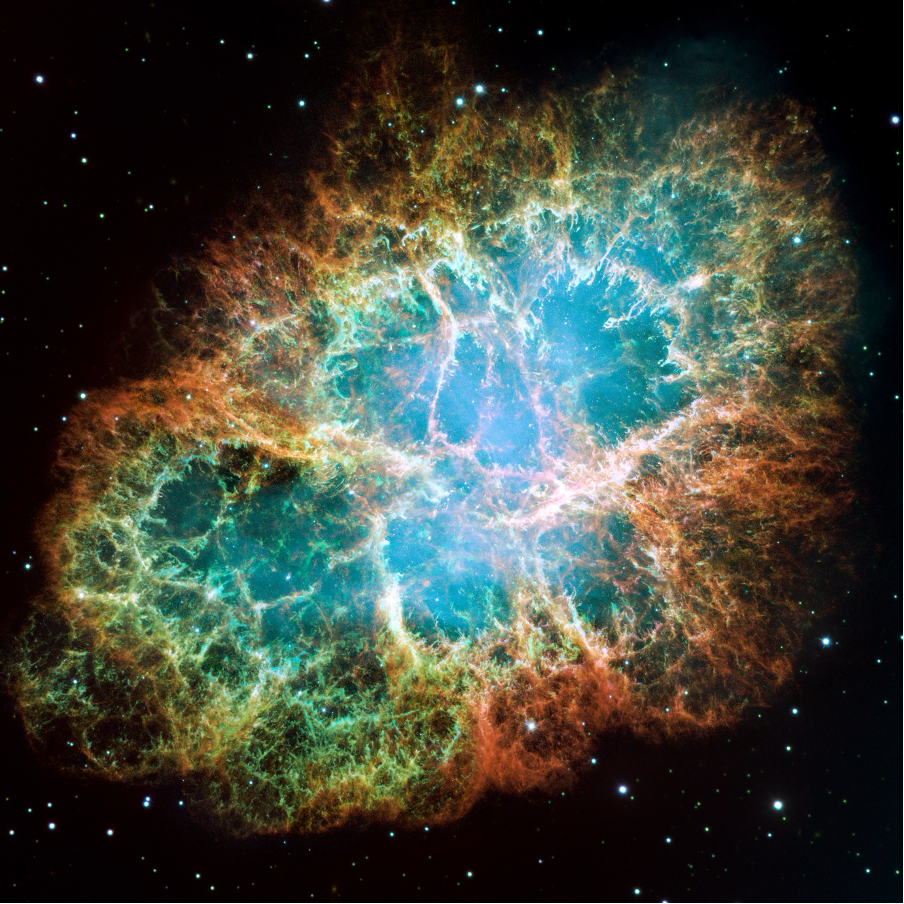
When stars collapse and die, in novae or supernovae, the nebulae formed from their deaths do not inherit organisational features of the parent stars. The form of a star is not heritable. Star formation is path-dependent assembly rather than replication.
In contrast, for complex adaptive systems, while they do not always replicate themselves in the same way that biological life does — through reproduction — they do replicate their structures; without a mechanism for copying functional organisation across time, adaptation collapses into transient dynamics rather than evolution.
For the familiar biological evolution, including that by natural selection, there are multiple layers of replication taking place:
In the individual cells of a lion, say, the biochemical machinery of the cell is converting nutrients such as amino acids and sugars into usable biologically active molecules to continue the maintenance and upkeep of each individual cell.
Across the entire body of the lion, its organs — systems of specialised cells with a unified purpose — are interacting and coordinating with each other to perform specialised functions, and, in most organs, are continually replacing each constituent cell to maintain overall organ function. An individual lifeform is stable over time in this manner — it exists in homeostasis, balancing its inputs and outputs over the course of its life (whether a mayfly or an oak tree).
And then, at the species level, the lions are reproducing with each other, sharing their genetic instructions with other members of the species to create a new generation of lion offspring. In order to stay stable over geological timespans, an individual organism is not stable, but the species — and all biological life — is stable because it is capable of replicating the structure of the system through reproduction.
Life is dynamically self-organised order that self-replicates.
In this sense, even viruses evolve, but they are not complete complex adaptive systems in isolation. Like genes or symbiotic species, their evolutionary dynamics are inseparable from the larger systems they inhabit. To understand viral evolution, one must therefore understand the adaptive machinery of the host organism itself, and see the virus as one element of the overall system.
But this doesn’t just apply to life.
Human institutions are the same way; they require reproduction of the rules and culture over time by reproducing these institutional building blocks in the minds of the humans that come and go within the institution.
It is not the elements — the people — that matter, it is their organised structure that persists across generations. No living person alive today was a member of the Bodleian Library at the University of Oxford when it was established in 1602, and yet the organisational structure of the institution, and its broad function, persists.
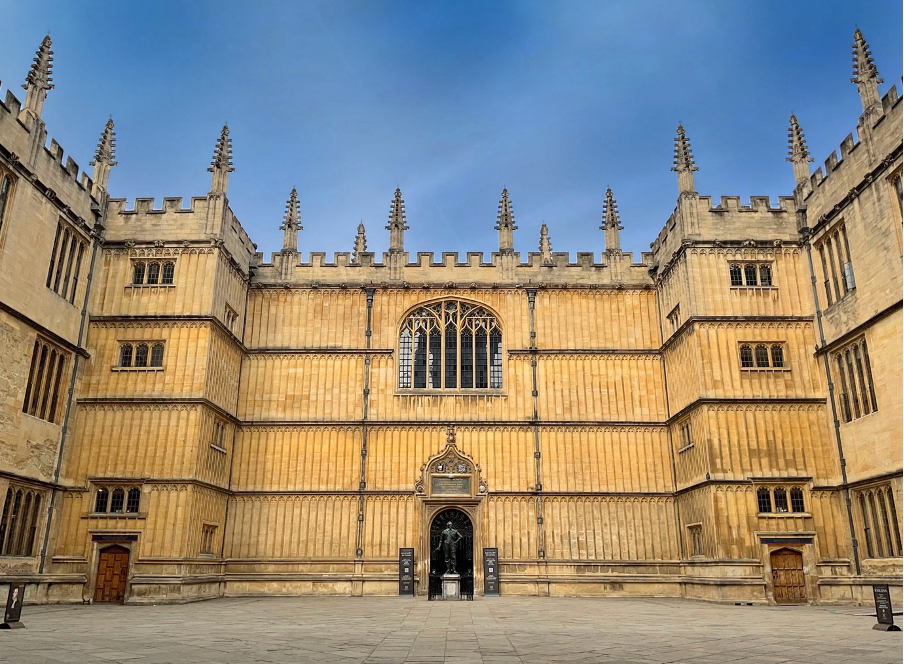
As an individual library, it maintains a supply of scrolls, books and other learning materials; it adapts in accordance with new ideas and knowledge over generations; the people who work within the library learn various filing systems and pass this knowledge to new hires. The individual library as an institution is a complex adaptive system that is designed to educate and share knowledge with the community of people who live around it.
And the Bodleian Library is a single example of the broader cultural invention of a library. Just as individual lions can die, but the species persists through genetic reproduction, so too can individual institutions collapse, just as the Great Library of Alexandria ceased to exist after the Roman era.
But the cultural idea of a library, once invented, persists within the super-organisational structure of human civilisation as a cultural recipe, a meme. Libraries can be built anywhere, with common rules learned from each other; the cultural unit of a library is then able to replicate, even while individual institutions come and go. Just as biological code is stored in the genome, institutional code is stored in the cultural equivalent: in the memories of individual humans and concretised in the written form.
It is the structure that is replicated, rather than the single instantiation of the entity, even if the replication is partial, noisy, distributed, indirect, or cultural, structural, or informational rather than material.
So, any complex adaptive system can vary, and it can pass these changes on to itself over time. When a new structure has evolved, it can then be built upon in an emergent way. A new shape has been built into the complexity of the evolving system that can then alter the future evolutionary trajectory of the system.
In summary
A system can only be both complex and adaptive if:
It is stable over time;
It has internal dynamics that generate variation;
It is capable of replicating its own structure; and
It has constraints or selection imposed upon it, either internally or by its environment.
And the necessary precondition for a system to evolve, rather than merely change over time (like a crystal growing in a cavern) is that it must be both complex and adaptive.
This is what the theory of evolution by natural selection is really telling us — that biological life is a complex adaptive system.
But it is far from the only one.
From consciousness to the global economy, we live inside a nested set of evolving complex adaptive systems.
In this article, we examined the elements that enable evolution to take place. But what determines its direction?
We will look at the role of selective pressures in the next piece. Because no system exists independently of its environment.
Subscribe to Everything Evolves to make sure you don’t miss it:
If you found this article thought-provoking, please share it with someone else who may find it interesting:
And please share your thoughts in the comments:
Even in systems where the elements are not replaced — e.g. nerve cells in the human brain — replacing a nerve cell with an identical copy would not alter the function of the overall system.